Sorcerer in the Abyss

Leo Sketch

The abyss is never far from the summit. I am fond of this concept, not because it sounds romantic, but because it reminds me of a basic truth. I am presently working on The Wolf Lords, the sequel to Outpost and the second installment in my high fantasy series The Fylking. It’s going well, and at some point I decided it was high time to start working on the cover art. Past time, in fact.

I love painting things like this. So I sketched it up, put it on my easel, got out all my oil paints and accoutrements and well, that was a week ago and there it still sits–in my way, of course–with this monstrous black abyss swirling around it that will, if I go near the thing, suck me in and annihilate my soul and that’ll be the end of it.

There are names for this phenomenon, I’m sure. I could write a textbook about it and yet, romantic platitudes aside, the sketched board is still on the easel collecting cobwebs and I can’t start the thing to save my skin. It’s not as if I don’t do this sort of thing like, every day. But sometimes the summit, that high I get when the numinous floods up and turns into something cool, is so far away all I can see is the abyss. It is an empty, lonely place.

How This IsJust…pick up a tube of paint and squirt it on the palette. No, not black! How about green. Aaaahahahahah this sucks. I hate painting.

The character in the sketch above, his name is Leofwine. A sorcerer of the Fenrir Brotherhood, he’s more adept at dealing with his personal demons than I am.

Death metal might help.

Write a blog post about it, that’ll inspire me. I can write anything, here. I’m a fantasy author. Here we go. I am about to start this painting, yes I am, right after I post this. You all heard me say it.

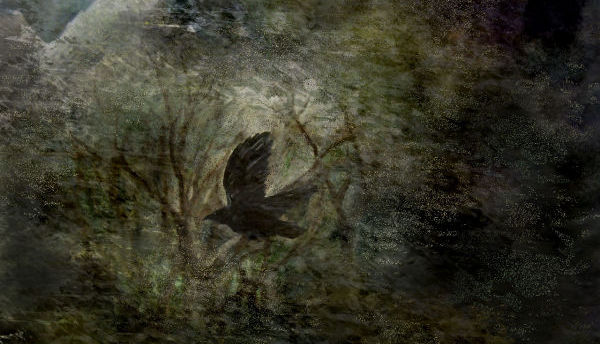
Little Tree, by F.T. McKinstry

The Wolf Lords, Book Two in The Fylking.

The Fenrir Brotherhood is an ancient order of sorcerers who serve the Wolf Gods of the North. Traditionally hired by warlords to protect their own bloody, ambitious interests, the brotherhood now keeps to itself.

Or so it is generally believed.

The older something is, the more secrets it keeps. And with the help of the Fylking’s enemies, the secrets of the Wolf Lords are about to unleash armies of demons across the land.

Those with second sight will be the first to die.

Coming in 2017.

Little Tree, by F.T. McKinstry

Outpost Cover ArtOutpost, Book One in The Fylking.

A race of immortal warriors who live by the sword.
A gate between the worlds.
Warriors, royals, seers and warlocks living in uneasy peace on one side of the Veil.
Until now.

© F.T. McKinstry 2017. All Rights Reserved.

Winter, Writing and The Wolf Lords

Celtic Stag

Yuletide Greetings!

It’s the winter solstice, the shortest day of the year. In the north where I live, seeing “First Day of Winter” on a calendar elicits a blank stare, because it has usually been winter for a month or two already. The same thing happens on the vernal equinox around March 20th. It’s the first day of spring somewhere, but not here, although there is a different feel in the air.

Snowy Woods

I love this time of year. It gets dark late in the afternoon, and between the distant sun and the dreary weather it feels dark all the time. There’s a spirit haunting the woods, pale, hungry, staring inward with black eyes into the void, the point of conception. For me, writing is like this, a continual series of winter solstices, a dark place where there’s nothing, then suddenly a shift happens and the words flow out like the return of the sun.

BearAside from this, well, somewhat tormented view of things, I love the dark season because I get to curl up like a growly bear and get some work done while the snow blows and the temperatures plummet. Right now, I’m working on Book Two in The Fylking, called The Wolf Lords. That’s a working title, but it’s growing on me and I’ll probably go with it. At some point, on a sunny day when the light is brilliant on the snow, I’ll pull out my oil paints and get to work on the cover art.

The Wolf Lords. Oh yes, the realm of Dyrregin isn’t wartorn for no reason. There’s always someone or something plotting trouble there. Just when you thought, after the bittersweet ending of Outpost, to relax and enjoy yourselves, the shadow of mayhem is rising again, this time from the Fenrir Brotherhood, an ancient order of sorcerers with some nasty issues and a new ally of which the Fylking would not approve.

So if you haven’t read Outpost, get your copy today and prepare yourselves! The Old Gods are watching and waiting.

Little Tree, by F.T. McKinstry

Outpost Cover ArtOutpost, Book One in The Fylking.

A race of immortal warriors who live by the sword.
A gate between the worlds.
Warriors, royals, seers and warlocks living in uneasy peace on one side of the Veil.
Until now.

© F.T. McKinstry 2016. All Rights Reserved.

Software Engineering and the Chasm between Science and Magic

Today I have the honor of being a guest over at Fantasy Book Critic, one of the ten bloggers participating in Mark Lawrence’s 2016 Self Published Fantasy Blog Off. I’ll be talking about software engineering, genre definitions, the merits of having nerve, the subtle yet indisputable element of science fiction in Outpost, and the chasm between science and magic. It’s a geekfest. You can check it out there, or read it below.

Little Tree, by F.T. McKinstry

“Fantasy is the impossible made probable. Science Fiction is the improbable made possible.” – Rod Serling

Way back when I had a respectable job, I took some college courses in software engineering. One of them was on compilers, a software program that transforms programming language into machine language used by a computer processor. I sat in there amid a serious bunch of guys wielding thick glasses, pocket protectors and computer science degrees, and I felt like an impostor. For my final exam, I wrote the front end of a compiler in AWK (anyone who knows what that is gets an Award of Excellence in Geekery). I didn’t know what I was doing, but I had imagination and a lot of nerve. I also feared the worst. When the instructor handed me my graded final, I expected him to say, “Who are you and what are you doing in this class?” Instead, he said, “I’ve never seen anything quite like this.” He gave me an A.

Turns out, this is an obscure metaphor for my take on fantasy and science fiction.

I spent the better part of my childhood reading not only speculative fiction but also the esoteric things that inspire it. I was the kind of kid who would do a book report on Hermetic occultism or Einstein’s Theory of Relativity. I was more somewhere else than here, but oddly, this taught me about reality. I never bothered to define the difference between fantasy and science fiction; now, I couldn’t say how many novels there are mixing strong elements of both. It’s a challenge to mix them without throwing out the definitions. Genres tend to blur over time, and then split into sub-genres, because gods forbid we can’t conveniently define something.

exileFor the sake of argument, let’s call these genres distinct and go with classical definitions. To my mind, Science Fiction starts on a foundation of what’s known and provable, usually involving technological advances, the state of civilization, etc., and goes from there. Think Childhood’s End by Arthur C. Clarke or Becoming Human by Valerie J. Freireich. Fantasy deals more in the realms of myth, fairy tales and the unreal, usually involving magic or otherworldly forces—and that’s not to say it has to be soft or without rugged themes or realities. In this context, J.R.R. Tolkien’s Lord of The Rings is definitive; the Legend of Drizzt series by R.A. Salvatore, Blood Song by Anthony Ryan and Ursula K. LeGuin’s Earthsea Cycle are exemplary.

In fantasy, within reason, you can do anything if you can imagine it. This is probably why I’ve always leaned towards this genre, particularly the epic or high sub-genres where nearly everything is made up aside from basic references that serve to ground us in the story; for example, a medieval setting. I’ve written some science fiction, but it’s not my first love and despite a long and varied high tech career, I avoid writing it for the same reason I hid beneath an invisibility cloak in compiler class: Impostor! It’s a world full of geeks and somebody will call me out.

And yet, by way of my aforementioned nerve, I went there.

After writing Outpost, which is decidedly fantasy—if not epic or high fantasy if we want to get persnickety—I wrote this little tag line: “Epic fantasy entwined with Norse mythology and a touch of science fiction.” I must have taken out and put back in “a touch of science fiction” a dozen times. Finally, I removed it, but it left a stain. No science fiction here! I grumped, and then I thought about it—an interdimensional portal with specific dimensions and geometry built by extraterrestrial warlords to travel to and from other planets without having to wait for rare planetary alignments, humans trained in the principles of light, crystals, and energy so they can maintain the power source—Yeah yeah, ok. A touch of science fiction.

Odin Rides to Hel

“Odin Rides to Hel” (1908) by W. G. Collingwood

But it’s subtle. Said warlords are immortal, like elves, they are essentially Vikings—albeit highly evolved ones—and walk alongside warlocks, goblins, draugr and gods. Reprieved! The idea here touches on Arthur C. Clarke’s venerable quote: “Any sufficiently advanced technology is indistinguishable from magic.” In other words, what’s real? There is a seeming chasm in our society between science and magic; what’s acceptable as real and what’s not; and this is evident in these genre definitions. There’s a feel to it. However, as the advance of quantum theory is showing us, this chasm is itself an illusion.

Ergo, I can write the front end of a compiler in any language I want. Hold my beer.

Little Tree, by F.T. McKinstry

Outpost Cover ArtOutpost, Book One in The Fylking. In a war-torn realm occupied by a race of immortal warlords called the Fylking, trouble can reach cosmic proportions. Using the realm as a backwater outpost from which to fight an ancient war, the Fylking guard an interdimensional portal called the Gate. The Fylking’s enemies, who think nothing of annihilating a world to gain even a small advantage, are bent on destroying it.

After two centuries of peace, the realm is at war. A Gate warden with a tormented past discovers a warlock gathering an army that cannot die. A King’s ranger is snared in a trap that pits him against the Fylking’s enemies. And a knitter discovers an inborn power revered by the gods themselves. Caught in a maelstrom of murder, treachery, sorcery and war, they must rally to protect the Gate against a plot that will violate the balance of cosmos, destroy the Fylking and leave the world in ruins.

The god they serve is as fickle as a crow.

“McKinstry’s book proves to be one of the best independently published fantasy novels of the past year. Tense, gritty, exciting, and romantic, Outpost is a tale avid fantasy readers won’t want to miss.” – Self-Publishing Review

Read for free with Kindle Unlimited.
Amazon

© F.T. McKinstry 2016. All Rights Reserved.

#SPFBO Review of Outpost on Fantasy Faction

Outpost Cover Art

G.R. Matthews on Fantasy Faction has reviewed Outpost for the Self-Published Fantasy Blog Off!

Check it out here.

spfbo-banner-6

Little Tree, by F.T. McKinstry

Outpost Cover ArtOutpost, Book One in The Fylking.

A race of immortal warriors who live by the sword.
A gate between the worlds.
Warriors, royals, seers and warlocks living in uneasy peace on one side of the Veil.
Until now.

© F.T. McKinstry 2016. All Rights Reserved.

#SPFBO Update: Outpost Made Finalist!

Well, it’s official. Lynn over at Lynn’s Book Blog has put Outpost forward as her finalist in this year’s Self-Published Fantasy Blog-Off put together by Mark Lawrence, author of the series The Broken Empire and The Red Queen’s War.

You can read Lynn’s lovely review here.

Outpost will now be considered with the other finalists by ten stalwart bloggers who will eventually pick one book as the ultimate winner. SPFBO is quite an undertaking, and I have great respect for the time and effort these guys have put into reading and considering 300 works, at 30 apiece, by self-published fantasy authors. Wow. Needless to say, I’m deeply grateful for this opportunity.

10 books out of 300. Check out the finalists here. Congratulations to all!

Little Tree, by F.T. McKinstry

Outpost Cover ArtOutpost, Book One in The Fylking.

A race of immortal warriors who live by the sword.
A gate between the worlds.
Warriors, royals, seers and warlocks living in uneasy peace on one side of the Veil.
Until now.

© F.T. McKinstry 2016. All Rights Reserved.

The Orb Weavers’ Empire

The Norns

The Norns

Spiders are fascinating creatures. I have great respect for spiders; aside from the good work they do around here, they have an ancient history of lore and mystique surrounding them. In many cultures, the spider is a powerful totem embodying the forces of creation. In Norse mythology, the spider is associated with the Norns, the spinners of fate. The Old Norse word “norn” also refers generally to weavers and workers of magic.

Garden Orb-Weaver

Garden Orb Weaver

In summer, the eaves around my house are cloaked in spider webs. Some of them are small and humble; others are huge. They hang in layers, and when the sun shines on them they look like galaxies. The big webs are made by a common spider called an orb weaver. A lovely, poetic title.

These creepy critters have grown so big I’ve given them names. In the image below, on the left by the hummingbird feeder, that web is home to Mephistopheles. Next one down is Sauron and the one over the bugbane is Poe (you can kind of see him in the center). It tends to get my attention when one of them drops down to attend to some dastardly business or other.

Orbweavers

Spider Paradise: House eaves, morning sun and gardens beneath.

Balrog lives on the porch. He spins a spectacular web every day in the same spot, right where I need to go to get out to the yard. He lurks up there as if to say “YOU SHALL NOT PASS!” (he finds this amusing) and I either have to brush the web aside or climb the woodpile to get by. I’ve explained to Balrog that building his web elsewhere, like, I don’t know, two feet to the left, would be good. But I’m not going to argue with him. One day I came out and there was a fly struggling in Balrog’s web. I actually waited for him to come down, wrap it up and haul it off before I cleared the way. Didn’t want him to miss out on a meal or anything.

By the mudroom there’s a web over 2 1/2 feet in diameter. I call it Shelob’s Lair. Yeah whatever just…back away slowly. Fumble for the Phial of Galadriel and hope for the best.

Deer FlyThe northwoods in summer is home to the ubiquitous deer fly. In case you’ve never encountered one of these assholes, here’s a description. (Tell me this wasn’t written by a New Englander. Hah!) Deer flies have been clocked keeping up with speeding trains (I’m not kidding), so you won’t get far. But I digress. As I was sitting on the porch one day, a deer fly hit the big web above the rosemary plant, struggled there, and damned if I didn’t cheer that spider on. “Hey, Death Eater! Breakfast! Come and get it, Buddy!”

I was a disturbed child.

Alas, the orb weavers have a short stint, here. Winter is coming and soon all that will be left of their empire are frozen cobwebs in the porch rafters. In honor of this venerable creature, there is a character in my novel Outpost called, simply, Spider. She’s a wisewoman revered by the warriors of her immortal race. Early on, Spider appears to a seer named Arcmael and gives him some cryptic advice. Later, she casts a powerful spell on his behalf–but it’s not what it seems. This causes Arcmael to abandon everything he knows to the point of nearly bringing on the imminent annihilation of the world.

Moral of the story: Never disregard the advice of a spider.

Little Tree, by F.T. McKinstry

Outpost Cover ArtOutpost, Book One in The Fylking.

A race of immortal warriors who live by the sword.
A gate between the worlds.
Warriors, royals, seers and warlocks living in uneasy peace on one side of the Veil.
Until now.

© F.T. McKinstry 2016. All Rights Reserved.

Ranger of the North Branch

Othin of Cae Forres

Othin of Cae Forres

From Outpost, Book One in The Fylking.

The King’s Rangers are an elite brotherhood of warriors who keep order in the wilds of Dyrregin. They are seasoned, skilled in fighting, traversing and surviving in rough terrain and dangerous circumstances, and employ a complex system of messaging through riders and ravens trained to scout patrol routes and recognize their rangers’ appearance. The rangers report directly to the King through five captains who command the areas within the arms of the Gate pentacle: North Branch, East Branch, Southeast Branch, Southwest Branch, and West Branch. The rangers’ motto is “We keep the balance when the gods turn away.”

Rangers' Coat of Arms

Rangers’ Coat of Arms

Othin of Cae Forres, shown above, is a Ranger of the North Branch. Named after the Raven God (Othin is an alternate spelling of Odin), a god of wisdom, trickery and war, he serves his brotherhood with honor until the woman he loves, a peasant girl named Melisande who is touched by the gods, gets him into trouble. For love of her, he lands on the wrong side of a political trap and flees into the wilds to save his skin and discover truth amid a rat’s nest of deception and betrayal.

Storms of War

When war seizes the realm, Othin must navigate bounty hunters, the living dead abominations of a renegade warlock, and a mysterious Otherworld shade that might be friend or foe. But his greatest challenge will be dealing with a malevolent immortal warlord who has set his sights on Melisande.

All in a day’s work…

Little Tree, by F.T. McKinstry

Outpost Cover ArtOutpost, Book One in The Fylking.

A race of immortal warriors who live by the sword.
A gate between the worlds.
Warriors, royals, seers and warlocks living in uneasy peace on one side of the Veil.
Until now.

© F.T. McKinstry 2017. All Rights Reserved.

Author Interview at Circle of Books

FT Banner

Welcome Midsummer, the longest day of the year. This year, the solstice coincides with a full moon, a rare alignment that happens once in a lifetime. What better time to shine light on the murky inner workings of a fantasy author?

Rose Moon, by F.T. McKinstry

Rose Moon, by F.T. McKinstry.

My interview with Circle of Books is now up on their website. Among other things, I talk about what inspires me to write fantasy, how I go about it, what I’m into, and my latest book, Outpost, Book One in The Fylking. Art, cats, music, notebooks and a passion for the worlds between, it’s all there. Serious questions for a tortured soul.

Come by for a visit!


© F.T. McKinstry 2016. All Rights Reserved.

Of Mice and Swordsmen

Dormouse
I live in the woods. Mice are a way of life, and while I’ve always had ferocious hunting cats, mice are very resourceful, especially in the fall when they’re looking for winter shelter. Who can blame them? Winter is nasty, here.

You could make an interesting psychological study some 3AM, wide awake staring at the ceiling, listening to a mouse chewing on something, who knows what, insulation, wiring, rafters; it’s stockpiling caches, building nests, making baby mice–the sucker is at least a foot long, has to be–yes, you could be the Great Shaman of all Wildlife Lovers but after imagining the horrible results of nocturnal mouse business you’ll be capable of anything.

Pattern Sense Cover ArtA while back, I wrote a little story called Pattern Sense, about a knitter who discovers the strengths and pitfalls of an ancient power through the love of a swordsman. I wasn’t being tormented by mice at the time (past trauma maybe), but in a vivid description of the aforementioned scenario, I came up with the perfect impetus for my protagonist to discover the extent of her skill.

If a mouse in the middle of the night can’t bring out a woman’s hidden powers, nothing can.

Pattern Sense made it to the second round finals with Daily Science Fiction, and then I published it in Tales of the Talisman. And then, something magical happened. This story, it seemed, was a glimpse of a full blown novel. This began to unfold and eventually became Outpost, Book One in The Fylking. In that story, there is more to our knitter’s power than mere hedge witchery; and the love between her and the swordsman goes to dark places indeed, a subplot driven by sorcery, treachery, war, and even the gods themselves.

Who knew? Mice have a good place in my life after all. Besides, they are cute.

Little Tree, by F.T. McKinstry

Outpost Cover ArtOutpost, Book One in The Fylking.

A race of immortal warriors who live by the sword.
A gate between the worlds.
Warriors, royals, seers and warlocks living in uneasy peace on one side of the Veil.
Until now.

© F.T. McKinstry 2016. All Rights Reserved.