A Sorcerer and His Runes

To the mind of a geeky author, “sorcery” is a rich and evocative term that could mean any number of things that may or may not have to do with traditional definitions. To this geeky author, it involves–and I quote:

An arrogant, unsavory bunch, old, flaccid and steeped in centuries of privilege and comfort, these men wielded a fine array of nasty skills particularly suited to war: detailed knowledge of demon hierarchies; a blithe willingness to use spit, blood, seed and sound to control and manipulate the natural order; and the inclination to summon every manner of freak and fiend from the Otherworld to spy, track, hold or kill anyone the sorcerers took an interest in. – The Wolf Lords

A rough crowd, this. Called the Fenrir Brotherhood, they are an ancient order of magicians who serve Loki, Prince of Wiles and the Father of Hel. But Adept Leofwine Klemet has his doubts as to whom his masters serve. Given the order’s bloody, patchy history, in which Leofwine is an expert, if the brotherhood served anyone it was Othin, the Allfather, a master of sorcery and runes who revels in the grim tides of war. A trickster and consummate shapeshifter, Othin would be more than pleased to move in the shadows of Loki’s dastardly reputation.

Fenrir sorcerers tend to have long shadows, and Leofwine is no exception. When his enemies catch up to him (which enemies always do) and reveal a devastating secret involving his little sister Ingifrith, Leofwine goes berserk and does the unthinkable by summoning a demon capable of destroying the entire realm in a storm of blood. This redoubtable act gains Leofwine not only the condemnation of his order but also the title of Wolf Lord, a wry designation used by otherworldly beings such as demonic warlords and sea witches to refer to the servants of Loki.

An unwitting votary of the Allfather, who was himself exiled for practicing the magical arts, Leofwine is handy with runes. Simple marks carved or painted on stone, wood or bone, the runes are not only an alphabet but also a sophisticated system of knowledge of patterns of consciousness and existence. Holding the power of those patterns, cast in symbols, stories and metaphor, Leofwine is able to see the forces underlying conscious experience and to use those forces to affect the web that connects all things.

As the legend tells, the god Othin goes to Yggdrasil, the World Tree, and hangs himself facing down into the bottomless void beneath the roots of the well. There, he suffers in agony for nine days and nights until he sees the runes in the depths. Then he picks them up and is transformed.

By way of his wits and faults, Leofwine will do the same…runes in hand.

Little Tree, by F.T. McKinstry

Laguz. The Otherworld, the primordial waters, the source, initiation, the shadows of dreams and the unconscious. Not negative in and of itself, this rune often appears when what you don’t know will hurt you.

A small leather pouch lay on the table by the hearth. Leofwine stopped, held his hand over the snarling wolf embossed on the pouch, and then flicked aside the ties and shook out a rune. The small pale bone of a hare he had killed during his apprenticeship contained a single mark with a hook on top, ridged as a knife, darkened by the blood he had spilled into the rift from his hand. Laguz. Always laguz, the power of the Otherworld, vast, fickle and implacable as the sea. The waters hid secrets, poisons and teeth.

Little Tree, by F.T. McKinstry

Ansuz. The rune of Othin, the Allfather in the Fylking pantheon. Divine inspiration, magic, the power of words. Beings from the Dark Realms hate ansuz, and it is often used to banish them.

Leofwine’s spine tingled. In the corner, something scrabbled up the woodwork and across the ceiling, rustling the drying plants. It twisted around, its legs growing longer, eight of them, as it lowered itself to the floor from a glistening line. As it touched down, it grew, blocking the door and the windows with a hairy body that smelled of mud. It stared from many baleful eyes, and in the back of whatever it called a throat emerged a gurgling growl.

“Leo,” Ingifrith said, backing away. “It’s not friendly.”

A guardian. The place had always been loosely guarded by the spirits of protective herbs, like the garland someone had left on the door to his workroom. But he had never seen anything like this in here before. No Blackthorn witch would be able to summon it.

Gathering his strength, Leofwine brought his life force into his hand, traced the rune of ansuz in the air and uttered a banishing command in Old Fylking. The creature screeched and fled, landing near a table cluttered with pottery. As the creature skittered beneath, several cups wobbled and crashed to the floor. “I was afraid of this,” Leofwine said. “We have to kill it.”

She stared. “Are you mad?”

Little Tree, by F.T. McKinstry

Algiz. Communication with the Otherworld, connection to the gods, protection.

Breath heaving, arms wrapped over his chest, Leofwine awaited the end. His mind was clear. “C’mon,” he grated through his teeth. In one hand, he gripped the algiz rune.

He didn’t pray. He didn’t fear.

The great wolf slammed down in a whirlwind of wrath, the tips of its black fur glinting with frost. Its breath was icy. It bared its teeth, slavering, pale eyes opaque, seeing only shadow. Mist swirled as it gathered its haunches for the kill.

“My life in exchange for death,” Leofwine said. “Kill them. Black as crows, all three, wicked as the lies of gods. They are unworthy of your kind.” His voice trembled as a lump grew in his throat. “My life for death.” He clutched the rune so hard his nails cut into the palm of his hand.

Fenrisúlfr waited.

Leofwine hung his head. A tear broke from his eye and crept down his cheek like fire. “My life to protect her.” Because I didn’t.

Little Tree, by F.T. McKinstry

Hagalaz. Witch magic, banishment, the rise and rule of buried patterns, stripping veils and catastrophic transformation. When his sister vanishes into the Otherworld, Leofwine is in no way cheered by the appearance of this rune.

Leofwine stood atop a brushy knoll, facing north. Arvakr grazed by his side. A cool, early morning breeze carrying the scent of the sea stirred the leaves on the trees and the wisps of his hair twining from the edge of his hood. He clutched a wound dripping blood in one hand and hagalaz in the other. The rune burned dark against his palm.

Wherever Ingifrith had gone, she meant business. If the gods were on anyone’s side, it was hers.

Little Tree, by F.T. McKinstry

Thurisaz. Misfortune, demons, opposition, persecution and the torment of women. To Leofwine, this rune makes for a very bad day.

One of the runes had landed near Leofwine’s face. Thurisaz. His throat closed up with a sick laugh that caught and died as Grimar hauled him up and slammed him against a tree. “What do your runes say, sorcerer?” He hissed the word like a curse.

Thurisaz. Breathing heavily, gazing from an eye half swollen shut, Leofwine said, “They say I should’ve hunted you down and killed you long ago.”

Grimar punched him in the stomach again. Leofwine choked, his vision going dark as he doubled over.

“Wrong.” Grimar drew his sword, wrenched Leofwine upright and pressed the blade to his throat. “They say, today you’ll lose your head.”

Not the most wholesome occupation, sorcery. But then again, it can be useful for getting out of sticky situations–as long as one remembers that the gods of sorcerers are tricksters.

Little Tree, by F.T. McKinstry

Outpost Cover ArtOutpost, Book One in The Fylking.

A race of immortal warriors who live by the sword.
A gate between the worlds.
Warriors, royals, seers and warlocks living in uneasy peace on one side of the Veil.
Until now.

“The tone is excellent, reminiscent of some of the earliest examples of grim Norse fantasy.” – G.R. Matthews, Fantasy Faction
Finalist, SPFBO 2016

Little Tree, by F.T. McKinstry

The Wolf Lords Cover ArtThe Wolf Lords, Book Two in The Fylking.

A wounded immortal warlock bent on reprisal.
An ancient order of sorcerers hungry for power.
Warriors beset by armies of demons and immortals.
And a lonely hedge witch whose dark secrets could change everything.
…If only they could find her.

“Awesome book. Loved the first book also. I hope there will be more in the series.” – Customer Review on Amazon

© F.T. McKinstry 2018. All Rights Reserved.

Georgie, Herald of Wickedness

I recently had the honor of sharing this on Mighty Thor JRS, an awesome blog to follow if you’re into Fantasy, Sword and Sorcery, Vikings and Norse Mythology. Here it is again in case you missed it.

Beasties

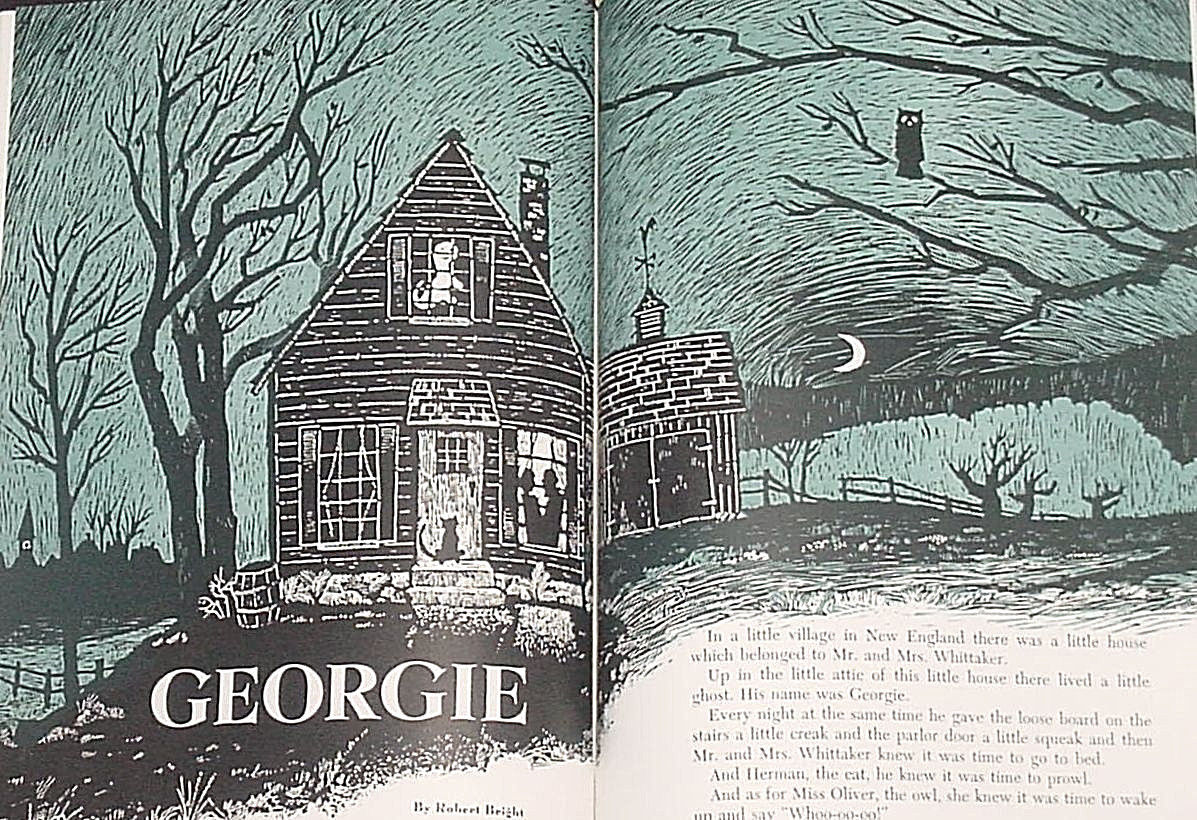
When I was a little kid, my mother would read me stories from a vintage 1960s Childcraft book. Well (clears throat), it wasn’t vintage then but whatever. My favorite story was called “Georgie,” about a ghost that haunted an old New England house and its kindly owners. Georgie wasn’t a bad ghost, just a little confused. I related to him. The addition of Herman the cat and Miss Oliver the owl permanently embedded this tale in my subconscious—or perhaps it was the other way around. Hard to tell.

https://wolfprintpublishing.com/wp-content/uploads/2018/01/georgie.jpg

Anyway, as it turns out, Georgie was a herald. All my favorite tales involve the Otherworld in one way or another, whether it’s a ghost, a vampire, an elf, a god or mortals such as shamans or witches who negotiate with such beings. I went from devouring high fantasy, swords and sorcery, and fairy tales to creating worlds of my own in which, despite Georgie’s charm, I quickly discovered a natural penchant for the darker side of things.

Of course, “dark” is a complex term that means different things to everyone. In my head it might take shape as a creepy, sightless demon that chews your face off, a malevolent phooka that will promise you one thing but deliver another, an elven warlock that might be your friend but probably isn’t, that cold finger on your spine at the thought of traveling through that particular forest, or the grim, sickening despair in your gut after a sorcerer curses you and you know you’re going to die.

Poor Georgie! He fell in with a bad crowd. Well, that’s what happens when you listen to the cat.

Being a votary of Tolkien since around Georgie’s time, I am strongly influenced by Northern European folklore and Norse mythology, which formed a custom groundwork in my high fantasy series The Fylking. Add to this palette works like The Witcher series by Andrzej Sapkowski, which is a motherlode of creepy, nasty fairytale monsters and the bastards who hunt them, or Michael Moorcock’s Elric of Melniboné, one of my favorite anti-heroes, and inspiration knows no bounds.

Here are some of my favorite beasties.

Draugr, Goblins and Phooka

Draugr. The draugr is an undead creature in Norse mythology. While often compared to a zombie, this creature is a bit more sophisticated. In Old Norse, draugr means “ghost,” but it’s closer to a vampire. Accounts vary, but generally, the draugr are described as walking dead warriors with superhuman strength, the ability to shapeshift, and the unmistakable stench of decay. They are implacable, seek vengeance and will kill anything that crosses their nightly rampages. In Outpost, these beasties bear these traditional attributes, but they are also given life by an immortal warlock with his own agenda. They are not bound to the night and, because of their otherworldly origin, they appear half somewhere else, are demonic and malevolent, cannot be killed and can only be released by the magician who created them.

Forget honor. While inhumanly strong, the draugr are only as skilled in arms and familiar with the land as the men they once were. Distract and disable. If overrun, flee.Outpost, Book One in The Fylking

Goblins. Nasty, foul-mouthed, wicked creatures. You would not want to cross their path, let alone offend them. Arcmael, the protagonist of Outpost, does both. He is a seer and a servant of the Fylking, immortal, unseen warlords who hold dominion over the realm. Arcmael lands on the bad side of the Otherworld, where most beings revere the Fylking as gods. But goblins revere nothing. They capture Arcmael and throw him in the bowels of their palace. Aside from his being fed some really disgusting fare, I won’t spoil what happens.

Truss him up! Drag him hither! Bind his limbs! Make him slither!Outpost, Book One in The Fylking

 
Phooka. The name has many variations which show up in Celtic cultures throughout Northwestern Europe. In Irish, púca means “spirit” or “ghost.” The Old Norse term pook or puki refers to a “nature spirit.” This creature is a shape changer, part human at times, or part or all animal such as a goat or a horse, always with dark fur. Bleak, uncanny and generally wicked, the phooka is best to be avoided; yet can also be beneficial depending on mood or circumstance. In Outpost and The Wolf Lords, a phooka summoned by a desperate sorcerer wreaks havoc as only a phooka can.

The village girl who went missing and was found on the last dark moon, floating in her uncle’s millpond, was said to have been fey and prone to accidents. A comforting tale. Leofwine saw the poor creature’s death in the runes: drowning by twilight, the pale green eyes of the phooka glinting on the surface of the pond.The Wolf Lords, Book Two in The Fylking

The Phooka

So if you’re into monsters, creepy creatures, fiends and the idgits who cross them, I have goodies for you. Don’t worry. I won’t tell Georgie.

Little Tree, by F.T. McKinstry 
The Chronicles of Ealiron features wizards, warriors, gods, a wolfish apparition with an agenda, clever ravens, a dastardly winged predator and an immortal sea serpent.

 
The Hunter’s Rede, Book One. Lorth of Ostarin is a hunter of men. Lawless, solitary and obscure, he is trained in magic and its inherent order. This uneasy combination of pitilessness and structure has made him the highest paid assassin in the land. It is also about to throw his life into chaos.

The trouble begins when Lorth returns home from a long absence to find his old haunts compromised by a cruel, upstart warlord who has invaded the realm and pushed it to the brink of war. Lorth’s cavalier attempt to elude a political sandpit quickly deteriorates into a series of skirmishes that he negotiates with a sword and a reckless penchant for using magic against the rules. He flees with a price on his head; but no angry warlords, wizards, foreign aristocrats or spooky apparitions can rattle him from the dark stability of his profession—until he is captured and condemned to execution by a formidable wizard who serves the old powers.

In his quest to prove his innocence and loyalty to the realm, Lorth discovers the value of his conflict between war and wizardry. But his quest turns bloody when love for a priestess and a will to avenge his homeland drives him to infiltrate an enemy occupation bent on domination and a blatant disregard for the forces of magic. This brings him to his greatest test, where he must surrender to the darkness of his nature to become a hunter unlike anything he has ever known.

The Fylking involves immortal warlords, elves, goblins, phooka, draugr, demons, warlocks, witches, sorcerers and all the trouble one can find dealing with them.

Outpost, Book One. In a war-torn realm occupied by a race of immortal warlords called the Fylking, trouble can reach cosmic proportions. Using the realm as a backwater outpost from which to fight an ancient war, the Fylking guard an interdimensional portal called the Gate. The Fylking’s enemies, who think nothing of annihilating a world to gain even a small advantage, are bent on destroying it.

After two centuries of peace, the realm is at war. A Gate warden with a tormented past discovers a warlock gathering an army that cannot die. A King’s Ranger is snared in a trap that pits him against the Fylking’s enemies. And a knitter discovers an inborn power revered by the gods themselves. Caught in a maelstrom of murder, treachery, sorcery and war, they must rally to protect the Gate against a plot that will violate the balance of cosmos, destroy the Fylking and leave the world in ruins.

The god they serve is as fickle as a crow.

The Wolf Lords, Book Two. The Destroyer of the Math Gate has not been idle in the sun’s turn since he nearly defeated the Fylking, his ancient enemies. Wounded, bitter and bent on reprisal, the immortal warlock has gathered an army. He has acquired a spell that will damage the veil between the worlds. And he is waiting.

The Fenrir Brotherhood is an ancient order of sorcerers who serve the Wolf Gods of the North. Haunted by a dark history, the brotherhood keeps to itself—or so it is generally believed. But the older something is, the more secrets it keeps, and the Wolf Lords have not only unleashed an army of demons across the land, but also let the Destroyer in.

When the Veil falls, war erupts and the realm is faced with legions of Otherworld beings, it is left to a sorcerer hunted by the Wolf Lords and a company of King’s Rangers broken by grief and trauma to find a hedge witch whose secrets could change everything.

Unfortunately, she is hiding between the worlds.

© F.T. McKinstry 2018. All Rights Reserved.

The Fylking Omnibus

War has the ears of wolves. High fantasy woven with Norse mythology, swords and sorcery.

In the worlds of their dominion they are called the Fylking, lovers of strife, song and steel, an immortal race of warriors akin to the Otherworld. Their empires span the heavens; their deities, ruled by the elusive Raven God, embody the forces of war, wisdom, passion and nature. This series tells the exploits of the Fylking and their mortal observers — warriors, royals, seers, lovers, warlocks and mercenaries — generations upon generations coexisting in uneasy peace with the Gods of War.

This omnibus edition includes both books in the series, Outpost and The Wolf Lords, a map and a glossary.

“The tone is excellent, reminiscent of some of the earliest examples of grim Norse fantasy.” – G.R. Matthews, Fantasy Faction

915 pages
Second edition

Map – Link included in the Table of Contents.

Amazon
Barnes & Noble
Apple
Kobo
Google

Little Tree, by F.T. McKinstry

Outpost Cover ArtOutpost, Book One in The Fylking. In a war-torn realm occupied by the Fylking, trouble can reach cosmic proportions. Using the realm as a backwater outpost from which to fight an ancient war, the Fylking guard an interdimensional portal called the Gate. The Fylking’s enemies, dark, malevolent beings who think nothing of destroying a world to gain even a small advantage, are bent on destroying it.

After two centuries of peace, the realm is at war. A Gate warden with a tormented past discovers a warlock gathering an army that cannot die. A King’s ranger is snared in a trap that pits him against the Fylking’s enemies. And a knitter discovers an inborn power revered by the gods themselves. Caught in a maelstrom of murder, treachery, sorcery and war, they must rally to protect the Gate against a plot that will violate the balance of cosmos, destroy the Fylking and leave the world in ruins.

Little Tree, by F.T. McKinstry

The Wolf Lords Cover Art /> The Wolf Lords, Book Two in The Fylking. The Destroyer of the Math Gate has not been idle in the sun’s turn since he nearly defeated the Fylking, his ancient enemies. Wounded, bitter and bent on reprisal, the immortal warlock has gathered an army. He has acquired a spell that will damage the veil between the worlds. And he is waiting.

The Fenrir Brotherhood is an ancient order of sorcerers who serve the Wolf Gods of the North. Haunted by a dark history, the brotherhood keeps to itself—or so it is generally believed. But the older something is, the more secrets it keeps, and the Wolf Lords have not only unleashed an army of demons across the land, but also let the Destroyer in.

When the Veil falls, war erupts and the realm is faced with legions of Otherworld beings, it is left to a sorcerer hunted by the Wolf Lords and a company of King’s Rangers broken by grief and trauma to find a hedge witch whose secrets could change everything.

Unfortunately, she is hiding between the worlds.

© F.T. McKinstry 2025. All Rights Reserved.

Wolves, Ravens and the Hooded One

Wolves and ravens. Romanticized, vilified and deified, these intriguing creatures reflect our dreams and shadows like few others. One source of their fame in popular imagination began in ancient Scandinavia, where reverence for wolves and ravens was not only pragmatic, such as the symbiotic relationship in which the animals led hunters to prey and shared in the spoils; but also pantheistic, by connecting to and identifying with the animals as helpers, shamanic totems, and messengers of the gods.

Enter Odin, the Allfather in the Norse pantheon. A deity par excellence, Odin is the one-eyed, all-seeing god of war, magic and wisdom. He is a complex and enigmatic figure, associated with poetry and inspiration, madness and battle fury. He hungers for knowledge. A notorious shapeshifter, he is known as a trickster who might grant favor to a devoted follower only to vanish when most needed. Odin is a patron of shamans, poets and magicians who, in their search for truth and pattern, endure grueling trials of hardship and isolation.

Wolves and ravens are Odin’s familiars, of a sort.

Among the many names attributed to Odin is Raven God. The connection between Odin and ravens is deep and ancient, existing before the Viking Age. A god of death and war, Odin was naturally associated with these carrion birds, the beneficiaries of sacrifices and battlefields, and harbingers of the god’s favor. In keeping with Odin’s intellectual nature, ravens are also extremely intelligent. Two of these birds, Hugin (thought) and Munin (desire), fly over the land and tell him of all they see and hear.

In traditional animal lore, crows and ravens are given the honor of belonging to both the seen and unseen realms. They are creatures of the hinterlands, mysterious, powerful and devious. That these birds tend to accompany death also makes them ominous, both feared and revered by their presence on the carcasses of animals, the condemned, or fallen warriors. They are omens, symbols of the implacability of death, and bringers of information from the other side.

Odin is also accompanied by two wolves, Geri and Freki (both meaning “ravenous” or “greedy one”). He gives his wolves all of his food, and drinks only wine. The wolves are said to roam over battlefields, devouring carnage. As the ruler and bestower of battle madness, Odin is the patron god of berserkers and warrior shamans called úlfheðnar (wolf-hides), who underwent powerful initiations in the wilds, living like wolves, to reach a state of possession and thereby acquire the beasts’ strength, fearlessness, and fury—much to the terror and dismay of their enemies.

On the flip side, Odin is the enemy of Fenrir, a monstrous wolf sired by Loki, a wily and ambivalent trickster god. When Fenrir grows out of control, the gods are compelled to chain the wolf using deception, a stunt that comes with a great sacrifice. Fenrir will break free at Ragnarok, the fall of the cosmos, and devour everything in his path, including Odin. Another story tells of Fenrir’s sons Skoll (One Who Mocks) and Hati (One Who Hates), wargs that chase the sun and moon through the sky in hopes of devouring them. At Ragnarok, they will catch their prey, and the sky and earth will darken and collapse.

The wolf, with its ferocious and apocalyptic reputation in Norse mythology, its prowess and grace in nature, and a distinctive howl that puts a primordial chill on the flesh, is an exemplary metaphor, an antagonist in many a dark tale, and a patron of warriors.

Given the frequent appearance of wolves and ravens in mythology, legends, folk and fairy tales throughout the ages, and their remarkable natural traits, it’s easy to see why they are so common in works of fantasy. Battle prowess, cunning, guile, mystery, trickery and darkness—imagery and metaphors abound. My own work is no exception; a love of Northern European mythology and the grim and sublime traits of wolves and ravens inspire me to no end.

In the Chronicles of Ealiron, an ancient hierarchy of wizards holds the raven as the highest level of attainment in the magical arts. The wolf takes on its spookier characteristics in the lore of the Old One, a goddess of life, death, and transformation. In her darkest aspect, the Destroyer, she appears in the shape of a wolf. Raven of the West, a novelette that takes place in the world of Ealiron, delves deeply into the shadowy, fickle nature of this being, who commands a high price for being summoned, good or ill.

Lorth of Ostarin, the driving force in the Chronicles of Ealiron, is an assassin raised by a wizard. He has the eyes of a wolf and an affinity for ravens, which, being the opportunistic creatures they are, tend to follow him around in much the same way they follow wolves, and for the same reason: to clean up the mess. Lorth and his grim companions also appear in “The Om Tree,” a short story told by an ancient tree that gets its best gossip from—you guessed it—ravens.

The Norse gods haunt many worlds, not just Earth. In Outpost, Book One in The Fylking, Odin, in keeping with his nature, appears at strange times and in strange ways, leaving our protagonists to wonder what he is and whose side he’s on. He goes by many names: Hooded One, Wanderer, Magician. He is served by the Fylking, immortal, Viking-like warriors who take the shapes of wolves and ravens, among other things, though even they can’t guess his agenda. The Wolf Lords, Book Two, delves into the Fenrir Brotherhood, an ancient order of sorcerers who serve the Wolf Gods of the North, including, it is said, Loki himself. Fenrir is their patron, a force used in a variety of nasty ways that don’t always serve the ones who summon him.

Odin, of course, lurks in the shadows, watching and waiting.

Little Tree, by F.T. McKinstry

If you’d like to see something beautiful about the value of wolves in nature, watch this: How Wolves Change Rivers

And if ravens fascinate you, do check out the work of Bernd Heinrich, a naturalist who has done fantastic research on ravens in the wild:
Ravens in Winter
Mind of the Raven: Investigations and Adventures with Wolf-Birds

Norse mythology? Here’s a good website, and it includes a reading list: Norse Mythology for Smart People

Little Tree, by F.T. McKinstry

The Chronicles of Ealiron
The Fylking
Outpost
The Wolf Lords
Raven of the West

© F.T. McKinstry 2018. All Rights Reserved.

Yuletide Wolves

Winter Light

Yule Greetings!

Each of the eight seasonal festivals in the Wheel of the Year have a certain magic around them, a spirit that connects all living things to the cycles of the sun and moon. The Winter Solstice is especially powerful, as it marks the rebirth of the sun from the darkness of the longest night. I live far enough north where this a clear transition; it gets dark at four in the afternoon, and when the bitter cold descends, one feels mortal. Knowing that the sun will return is a wonderful thing.

Solstice

I love the pristine silence of the longest night, like something finished and yet hopeful. It can feel daunting, a Dark Night of the Soul when the darkness is so all-encompassing it seems there was never light and never will be. This is a tricky thing about transformation. It’s also where the magic happens.

So I couldn’t think of a better day to release The Wolf Lords, which is haunted by these themes. The demons you think are safely dispatched return to claim their due. Warriors, witches and those who know the loneliness of power face a dragon of darkness, and to prevail, they must do the unimaginable.

Bring it on. Where would we be without demons, goblins, elves and immortal warlocks?

Little Tree, by F.T. McKinstry

The Wolf Lords Cover Art Book Two in The Fylking.

The Destroyer of the Math Gate has not been idle in the sun’s turn since he nearly defeated the Fylking, his ancient enemies. Wounded, bitter and bent on reprisal, the immortal warlock has gathered an army. He has acquired a spell that will damage the veil between the worlds. And he is waiting.

The Fenrir Brotherhood is an ancient order of sorcerers who serve the Wolf Gods of the North. Haunted by a dark history, the brotherhood keeps to itself—or so it is generally believed. But the older something is, the more secrets it keeps, and the Wolf Lords have not only unleashed an army of demons across the land, but also let the Destroyer in.

When the Veil falls, war erupts and the realm is faced with legions of Otherworld beings, it is left to a sorcerer hunted by the Wolf Lords and a company of King’s Rangers broken by grief and trauma to find a hedge witch whose secrets could change everything.

Unfortunately, she is hiding between the worlds.

Little Tree, by F.T. McKinstry

Outpost Cover ArtHaven’t read Book One yet? Oh dear.

A race of immortal warriors who live by the sword.
A gate between the worlds.
Warriors, royals, seers and warlocks living in uneasy peace on one side of the Veil.
Until now.

“The tone is excellent, reminiscent of some of the earliest examples of grim Norse fantasy.” – G.R. Matthews, Fantasy Faction
Finalist, SPFBO 2016

© F.T. McKinstry 2017. All Rights Reserved.

The Wolf Lords Released

Wolf Lords Cover

Samhain Greetings.

Good things take time. Often enough, it’s the things we love the most that require the most time and energy. We’ll throw my next novel, The Wolf Lords, into that category. I wrote this beastie amid two years of personal hell I’ll call shamanic initiation, for lack of a better term. Though it’s Halloween, I’ll spare you the gory details. Watch a horror movie.

PhookaBeing a dark, tormented, sensitive sort, I have a strong connection to this time of year, the Gaelic festival of Samhain. Horror movies, tricks and treats aside, Samhain is a transformational time that marks a change in the natural world, a descent into darkness. The veil between the physical and spirit worlds thins, a portal that allows energy to flow between. One can release things to the void, pass through the darkness, and emerge renewed.

When dealing with the spirit world, there is an exchange of energy. In the old days this was accomplished with a blood sacrifice, a literal interpretation of a spiritual truth. Releasing the old is a treat to the spirits, one that will spare you a trick in the form of your personal ghouls rising up to claim you like a zombie horde. Not that I’d know anything about that.

Okay, I know quite a bit about that but whatever.

Anyway, in the realm of Dyrregin in my fantasy series The Fylking, the veil is frequented by not only witches and warlocks but also seers who serve an unseen immortal race of warriors called the Fylking. All of this happens beyond most mortals’ ability to perceive. In Outpost, Book One, a handful of mortals with second sight deal singlehandedly with the sort of nastiness the spirit world is capable of in the hands of a powerful enemy. But in The Wolf Lords, ambitious sorcerers and the Fylking’s ancient enemy change the veil itself, unleashing upon the realm things best left unseen.

Little Tree, by F.T. McKinstry

The Wolf Lords Cover Art Book Two in The Fylking.

The Destroyer of the Math Gate has not been idle in the sun’s turn since he nearly defeated the Fylking, his ancient enemies. Wounded, bitter and bent on reprisal, the immortal warlock has gathered an army. He has acquired a spell that will damage the veil between the worlds. And he is waiting.

The Fenrir Brotherhood is an ancient order of sorcerers who serve the Wolf Gods of the North. Haunted by a dark history, the brotherhood keeps to itself—or so it is generally believed. But the older something is, the more secrets it keeps, and the Wolf Lords have not only unleashed an army of demons across the land, but also let the Destroyer in.

When the Veil falls, war erupts and the realm is faced with legions of Otherworld beings, it is left to a sorcerer hunted by the Wolf Lords and a company of King’s Rangers broken by grief and trauma to find a hedge witch whose secrets could change everything.

Unfortunately, she is hiding between the worlds.

Amazon

Little Tree, by F.T. McKinstry

Haven’t read Book One yet? Tsk. I’m telling the ghouls.

Outpost Cover ArtOutpost, Book One in The Fylking.

A race of immortal warriors who live by the sword.
A gate between the worlds.
Warriors, royals, seers and warlocks living in uneasy peace on one side of the Veil.
Until now.

© F.T. McKinstry 2017. All Rights Reserved.

Chocolate, Metal and The Wolf Lords

I’ve just put the last line down of The Wolf Lords, Book Two in The Fylking. I should be dancing around, and some ghostly part of me is, I suppose, but the rest of me feels empty. Every time.

Staring into the void. It’s like something from the book itself, a nasty warlock’s spell that brings everything into some bleak dimension, throwing mortals, demons and gods alike into an existential crisis.

Let’s see. Chocolate, coffee, ice cream, scotch, they might help. Metal, naa, that doesn’t count, I’m always doing that. Well, chocolate too, for that matter. Oh, and coffee.

 
Editing! That’s next. Fortunately, I’m one of those sick bastards who loves editing. Under my reign, this will be bloody–and when my editor gets hold of it, then the real carnage will begin. Just in time for Halloween, my favorite time of year.

 
Little Tree, by F.T. McKinstry

Outpost Cover ArtOutpost, Book One in The Fylking.

A race of immortal warriors who live by the sword.

A gate between the worlds.

Warriors, royals, seers and warlocks living in uneasy peace on one side of the Veil.

Until now.

“The tone is excellent, reminiscent of some of the earliest examples of grim Norse fantasy.” – G.R. Matthews, Fantasy Faction

Finalist, SPFBO 2016

Little Tree, by F.T. McKinstry

The Wolf Lords Cover ArtThe Wolf Lords, Book Two in The Fylking.

A wounded immortal warlock bent on reprisal.

An ancient order of sorcerers hungry for power.

Warriors beset by armies of demons and immortals.

And a lonely hedge witch whose dark secrets could change everything.

…If only they could find her.


© F.T. McKinstry 2017. All Rights Reserved.

Demons at the Bar

Swamped

“The most terrifying thing is to accept oneself completely.” – C.G. Jung

My life is falling apart.

Sounds charming, put like that. Imagine if you will some poor bastard, drunk at a bar, ordering that fifth whiskey while he drags his fingers through his hair as if to pull it out. The bartender is shaking his head with a faint smile. He’s heard it all before.

A better image would be of a sand castle being slowly sapped and dissolved by the waves of an uncaring sea. Cruel, silent, inexorable, years of it, career issues, health issues and the ever-strengthening shadows of my fucked up youth. I sit up here in the woods and write stories, talk to myself and the gods and the houseplants, and crank metal until my ears bleed. I don’t want to talk to anyone. I don’t want to do yoga. I’m sick of eating healthy. If I see one more sanctimonious, inspirational meme on Facebook I’m going put my fist through the screen. I sit outside, and my cats come around and sit with me, looking this way and that, alert, or sleeping with one eye open, as if they’re guarding me. They have a big responsibility. The veil between my mind and the boundless waters of the unconscious has grown thin and my demons won’t leave me alone.

Goblins

There are some interesting names for this process: life transition, Neptune/Chiron transits, clinical depression, dark night of the soul, desensitization and reprocessing, alchemical dissolution, and shamanic initiation, to name a few.

Let’s go with that last one. I’ve read quite a few books on these sorts of things. I want answers. I was attracted to the idea of shamanism, particularly the Northern European variety, and I looked into it. But it wasn’t until things got nasty that I went back and looked at it again, particularly the dark parts concerning initiation. This rugged ordeal involves long-term isolation, debilitating illness, dismemberment, being devoured and spit out into a steaming pile of cat puke by your demons (ok, I added that last part, except for the demons).

So after I shook off the chill, I thought, Yeah right. Shamanic initiation. I’m just inventing something romantic to deal with my crumbling life. But there’s nothing romantic about this. It’s a suckfest wielding one nasty punch after another, a testament to humans’ amazing ability to invent false bottoms. It goes something like this: “I have to be at the bottom, now! This can’t possibly get any worse!” Uh-huh, nice try. Go directly to Jail. Do not pass Go. Do not collect $200. Feel free to imagine me laughing hysterically.

My man left me, just recently. Ah, the peaceful sound of another false bottom washing away into the sea. He moved in with another woman and they’re dancing and laughing in some sunny meadow of romantic fulfillment, or so it seems to me, sitting in my cave, staring into the void, issuing concert tickets to a never-ending flood of demons arriving from the shadows of my past. It’s like this dream I once had. I’m standing in the dark on the forest’s edge, gazing at a warm campfire in the distance, when something invisible comes up behind me, put its hand over my mouth and drags me into the night. Just like that.

Scary WolfI’m between the worlds. I shapeshift between fearing the wolf and becoming the wolf.

At the end of the day, I am a creative sort, and if there’s anything that will not be ignored, it’s that. This is a good thing. So I’m working on my next book, The Wolf Lords. I never sat down and decided to write a story about all this. It doesn’t work that way. I just wrote a story. But, ironically, it’s full of demons and the sorcerers who love them, all kinds of surly, implacable characters wreaking havoc on things because they can.

The experts say, “Write what you know.” Writer blogs are full of platitudes like that, stale little cookies we devour to fill the void because facing the void means dealing with our demons. Fortunately, when it comes to that, I’m not inclined to take prisoners. So I’m taking the aforementioned platitude to heart.

We’ll see how many of my characters survive it.

© F.T. McKinstry 2017. All Rights Reserved.

Guest Post on Mighty Thor JRS!

Today I have the pleasure—nay, the honor—of being a guest over at Mighty Thor JRS, one of my favorite fantasy book blogs. I’ll be talking about the venerable wolf and raven, their place in myth, folklore, and my own work; and their ancient association with Odin, the Allfather in the Norse pantheon and a patron of warriors, magicians, and poets alike. If you’re into Norse mythology, shady creatures, shapeshifters, shamans, berserkers and the like, and you’d like to see some art inspired by such things, stop by for a visit:

Wolves, Ravens and the Hooded One

My heartfelt thanks to James Schmidt for this wicked fun opportunity to geek out. 🙂

The Wanderer

The Wanderer

© F.T. McKinstry 2017. All Rights Reserved.
The Wolf Lords

Book cover, the Wolf Lords

Welcome to the official page for The Wolf Lords, Book Two in The Fylking, a fantasy series woven with Norse mythology, swords and sorcery.

Little Tree, by F.T. McKinstry

The Destroyer of the Math Gate has not been idle in the sun’s turn since he nearly defeated the Fylking, his ancient enemies. Wounded, bitter and bent on reprisal, the immortal warlock has gathered an army. He has acquired a spell that will damage the veil between the worlds. And he is waiting.

The Fenrir Brotherhood is an ancient order of sorcerers who serve the Wolf Gods of the North. Haunted by a dark history, the brotherhood keeps to itself—or so it is generally believed. But the older something is, the more secrets it keeps, and the Wolf Lords have not only unleashed an army of demons across the land, but also let the Destroyer in.

When the Veil falls, war erupts and the realm is faced with legions of Otherworld beings, it is left to a sorcerer hunted by the Wolf Lords and a company of King’s Rangers broken by grief and trauma to find a hedge witch whose secrets could change everything.

Unfortunately, she is hiding between the worlds.

Little Tree, by F.T. McKinstry

Novel, 502 pages
Second edition
Includes a map and a glossary.
Edited by Leslie Karen Lutz
Reviews
Add to Goodreads

“The sheer scope and linguistic brilliance of this novel make it a delight to get lost in; few authors can weave such an expansive work of fantasy into a tight, smart, and emotionally engaging tale.” – Self Publishing Review

SPR Review Badge


Read for free on Kindle Unlimited.

Little Tree, by F.T. McKinstry

Book cover, OutpostOutpost, Book One in The Fylking.

A race of immortal warriors who live by the sword.
A gate between the worlds.
Warriors, royals, seers and warlocks living in uneasy peace on one side of the Veil.
Until now.

“The tone is excellent, reminiscent of some of the earliest examples of grim Norse fantasy.” – G.R. Matthews, Fantasy Faction
SPFBO Finalist
Read for free on Kindle Unlimited.

© F.T. McKinstry 2025. All Rights Reserved.